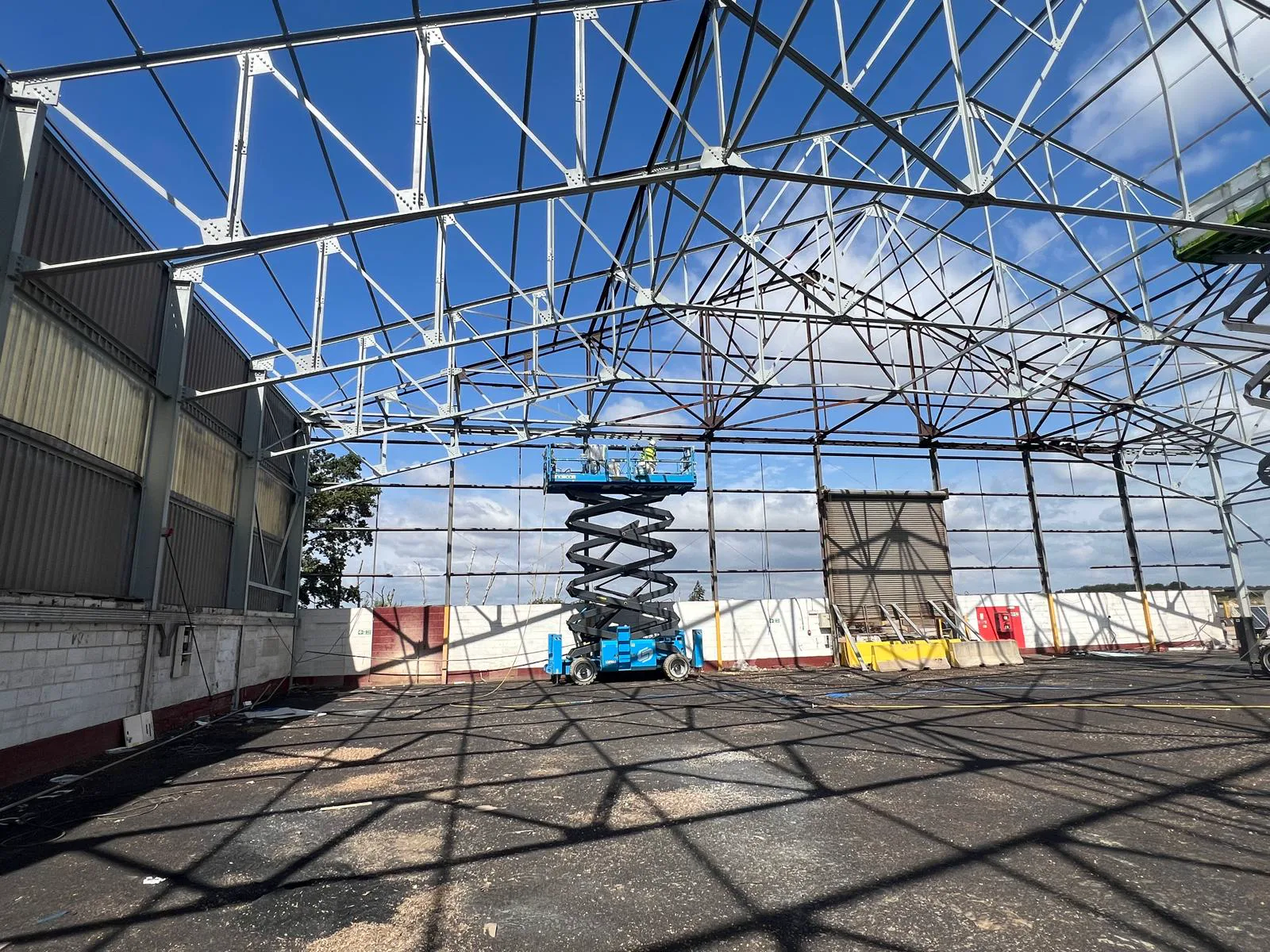
Refurbishment steelwork planning
Steelwork refurbishment and fire protection: condition-led planning for retained steel.
Existing structural steel needs a condition-led starting point before a fire-protection coating route is scoped. This guide explains the information that should be gathered about retained coatings, unknown primers, corrosion, access and live-site interfaces; it does not approve retained steel or diagnose suitability from photographs alone.
Existing steel needs evidence before an application route is assumed.
Retained members can carry historic coatings, unknown primers, local repairs, corrosion, contamination or areas that have been changed since original construction. Gather available records and site information early so the project can distinguish what is known from what still needs responsible technical confirmation.
Unknown primers and old coatings are decision points, not assumptions.
A familiar appearance does not establish coating identity, condition or compatibility with a proposed intumescent system. Premier Blasting can identify delivery questions from the workface, but the responsible project and selected manufacturer parties decide whether a retained coating can be accepted, needs investigation or requires an agreed preparation route.
Condition affects the commercial scope as well as the technical route.
Corrosion, dirt, grease, loose coating, local damage, difficult connections and inaccessible faces can affect containment, access, preparation time and programme. A useful early review records representative conditions and limitations without presenting photographs as a substitute for a condition or compliance decision.
Live-building interfaces need deliberate planning.
Refurbishment work can sit alongside occupants, production, completed finishes and operating services. Segregation, ventilation, masking, working windows, material movement, access plant and follow-on trades should be considered before a preparation or application programme is agreed.
The agreed route can then be planned transparently.
Where the issued information and responsible confirmations support it, the project may proceed with accepted prepared steel or a combined preparation-and-coating package. Our role is to plan and deliver that agreed scope; it is not to certify the existing steel, choose the technical system or approve design compliance.
Project planning sequence
How retained-steelwork fire-protection scopes are planned
Every project starts with its own issued information and workface conditions. This is the practical sequence used to define a coating scope before mobilisation.
Gather available steel and coating history
Collect drawings, previous coating information, fire-protection documentation, maintenance records and representative site evidence where available.
Review the actual condition
Assess visible corrosion, contamination, coating breakdown, local damage, repairs, inaccessible areas and unknown-primer questions as part of a scope review.
Refer retained-system decisions for confirmation
Ask the responsible project and selected manufacturer parties to confirm the route for retained or unknown coatings before application planning is finalised.
Plan preparation and application around the workface
Define access, segregation, masking, containment, programme windows and whether a preparation-and-coating route is needed for the agreed scope.
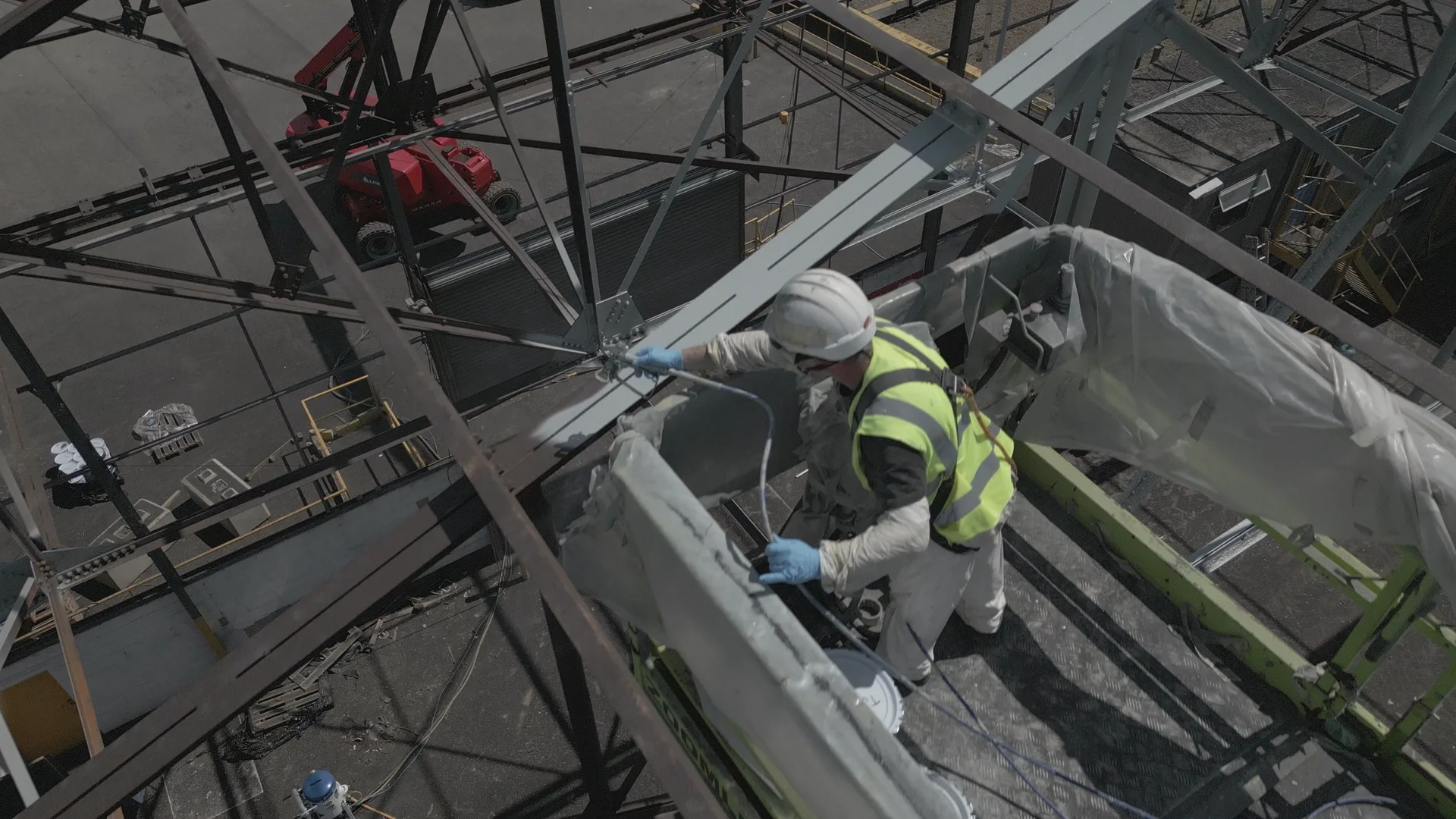
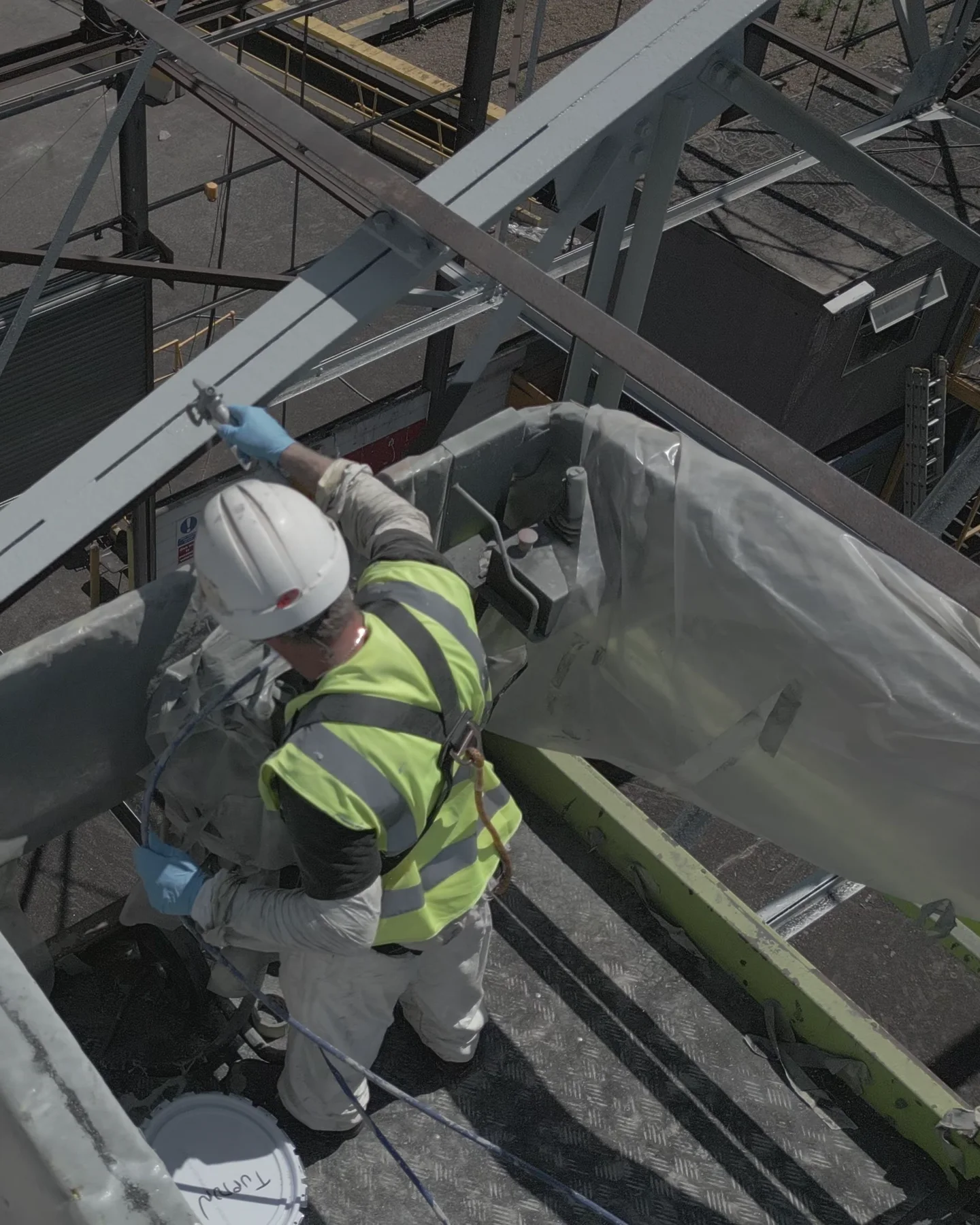
Planned around the actual steel and access.
Our work is organised around the practical workface: steel geometry, access, protection measures and the specified coating route.
Questions before mobilisation
Project details, answered clearly.
Early answers on scope, access and sequencing help the work package move forward with fewer assumptions.
Ask another question01Can Premier Blasting tell whether an old coating is suitable from a photograph?
No. Photographs can help a scope conversation, but they cannot establish product identity, compatibility, adhesion, hidden contamination or project-specific acceptance. The responsible project and selected manufacturer parties need to confirm the technical route.
02Do retained coatings always need to be removed?
No. The route depends on the known coating information, condition, compatibility and project requirements. We do not assume either retention or removal without the relevant technical confirmation and agreed scope.
03What should a refurbishment enquiry include?
Send available drawings, fire-protection information, previous coating or primer records, photographs of representative steel, details of corrosion or damage, access constraints, live-site restrictions and the proposed programme.
04Can you confirm the required coating thickness from the fire rating alone?
No. The required build is system- and section-specific. We work from the approved product schedule, steel information, required resistance period and project specification.
05Can Premier Blasting provide both preparation and application?
Yes. Where the project requires it, one delivery team can complete abrasive preparation, compatible primer application, intumescent coating and the specified finish as one coordinated sequence.
Prepared. Applied. Coordinated.
Need a contractor to review the steelwork and scope?
Share the project information you already have. We will identify the next practical step.