Application-only route
Standalone intumescent painting for prepared, specification-ready steel.
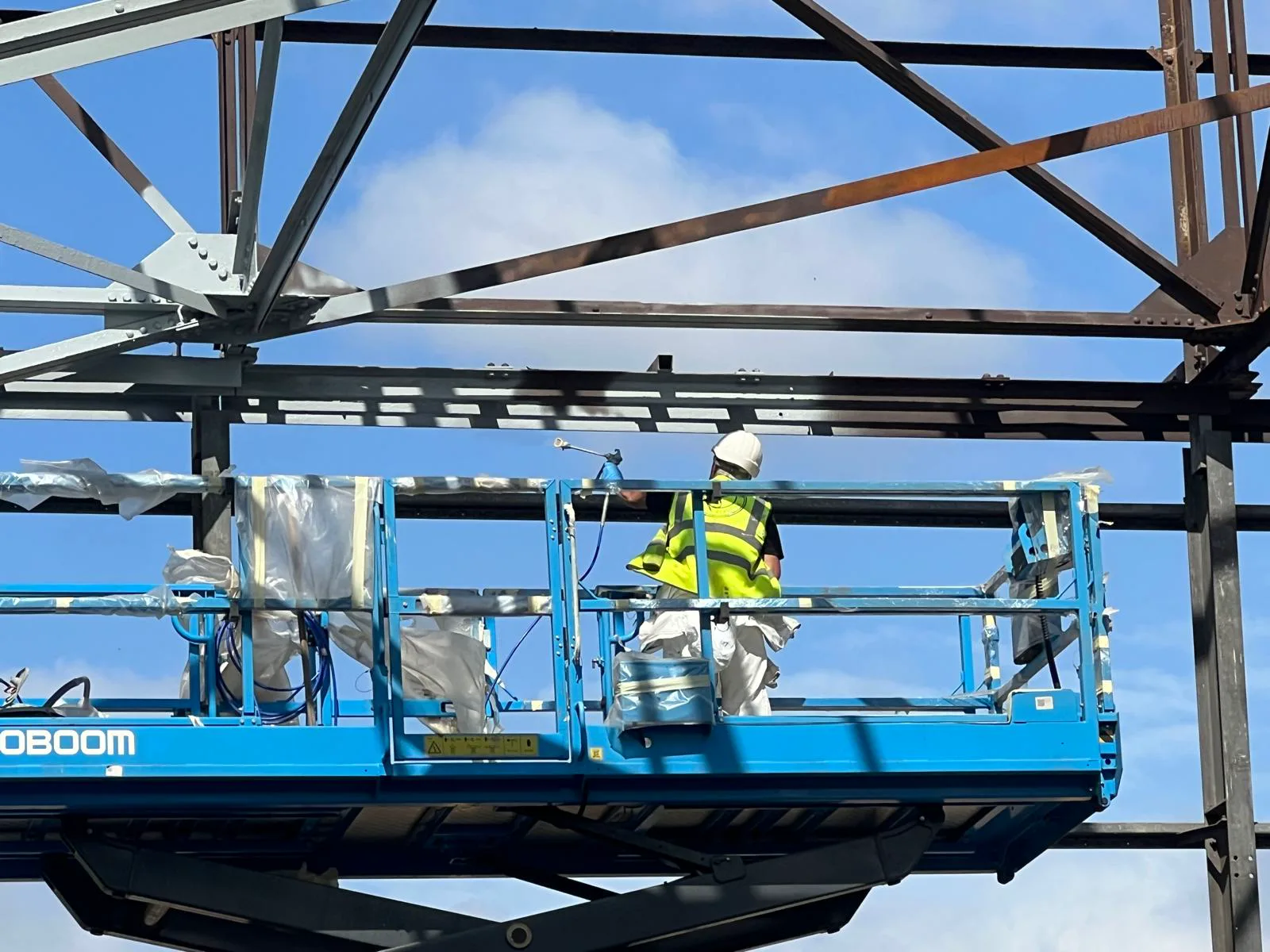
Where steel has already been prepared and primed under another package, we can provide the intumescent application stage—subject to substrate condition, primer identity and system compatibility being accepted before work starts.
The incoming surface has to be suitable for the specified system.
Before application, we review available primer information and inspect the steel for contamination, damage, corrosion and local breakdown. Any acceptance limits or remedial preparation are agreed before coating.
Application is planned around geometry and access.
Connections, flanges, webs, difficult junctions and masked interfaces can drive application time. We plan spray access and hand-detailing so coat build can be developed across the actual steel arrangement.
Application follows the selected system.
Coat passes, drying intervals and any local additional build are completed in line with the project specification and product requirements before the work moves to the next stage.
Project planning sequence
How standalone intumescent painting is planned
Every project starts with its own issued information and workface conditions. This is the practical sequence used to define a coating scope before mobilisation.
Review primer acceptance
Confirm available primer identity, condition and compatibility information before treating the incoming steel as ready for the specified system.
Inspect the workface
Assess contamination, damage, corrosion, local coating breakdown, steel geometry and the access required for controlled application.
Plan spray and detail work
Set out platform positions, masking, spray passes and any local hand-detailing around connections, flanges and difficult junctions.
Apply the issued coating route
Build the intumescent coating in line with the selected product-system requirements, project specification and agreed sequencing.
Planned around the actual steel and access.
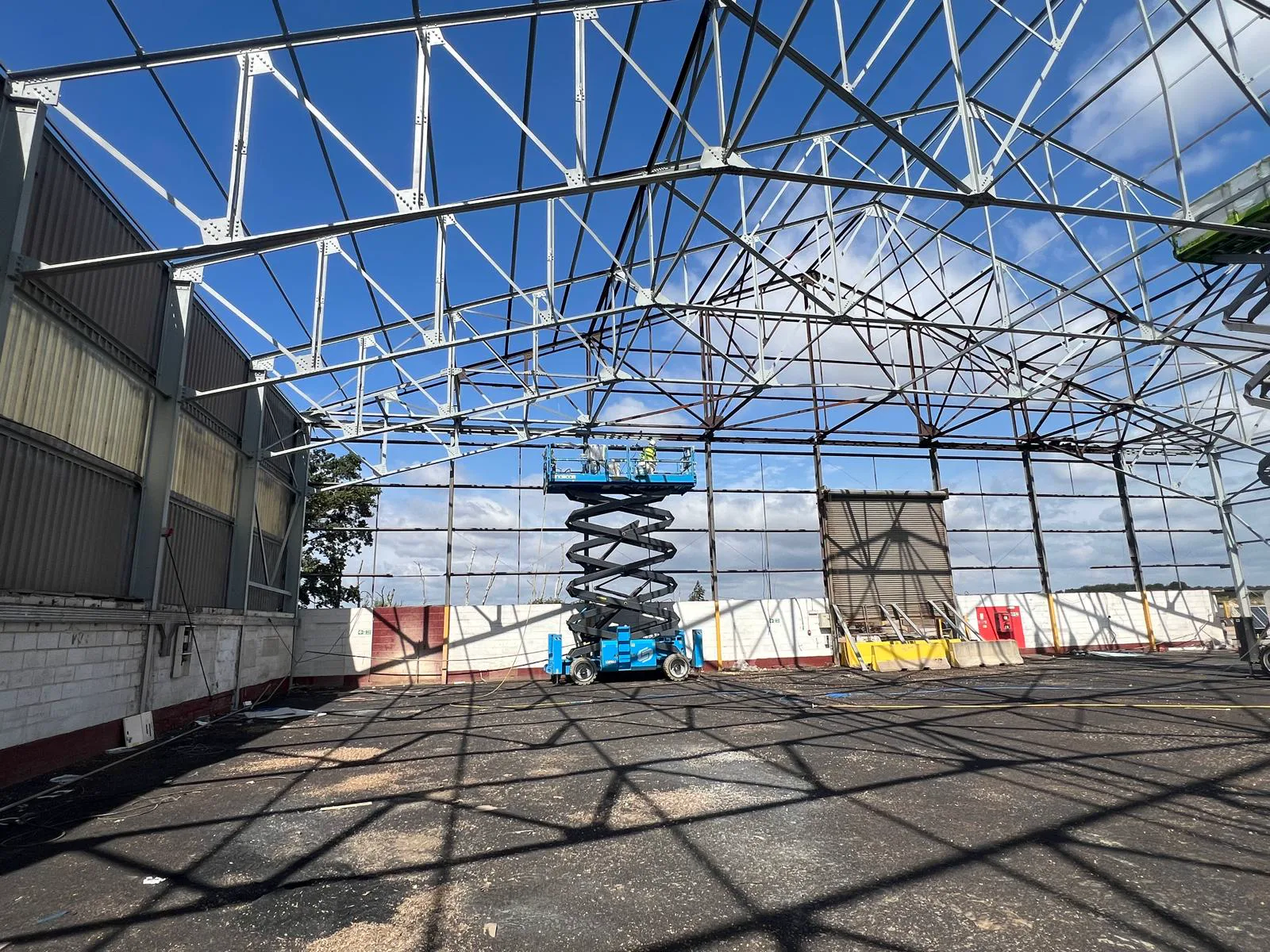
Our work is organised around the practical workface: steel geometry, access, protection measures and the specified coating route.
Project demonstration
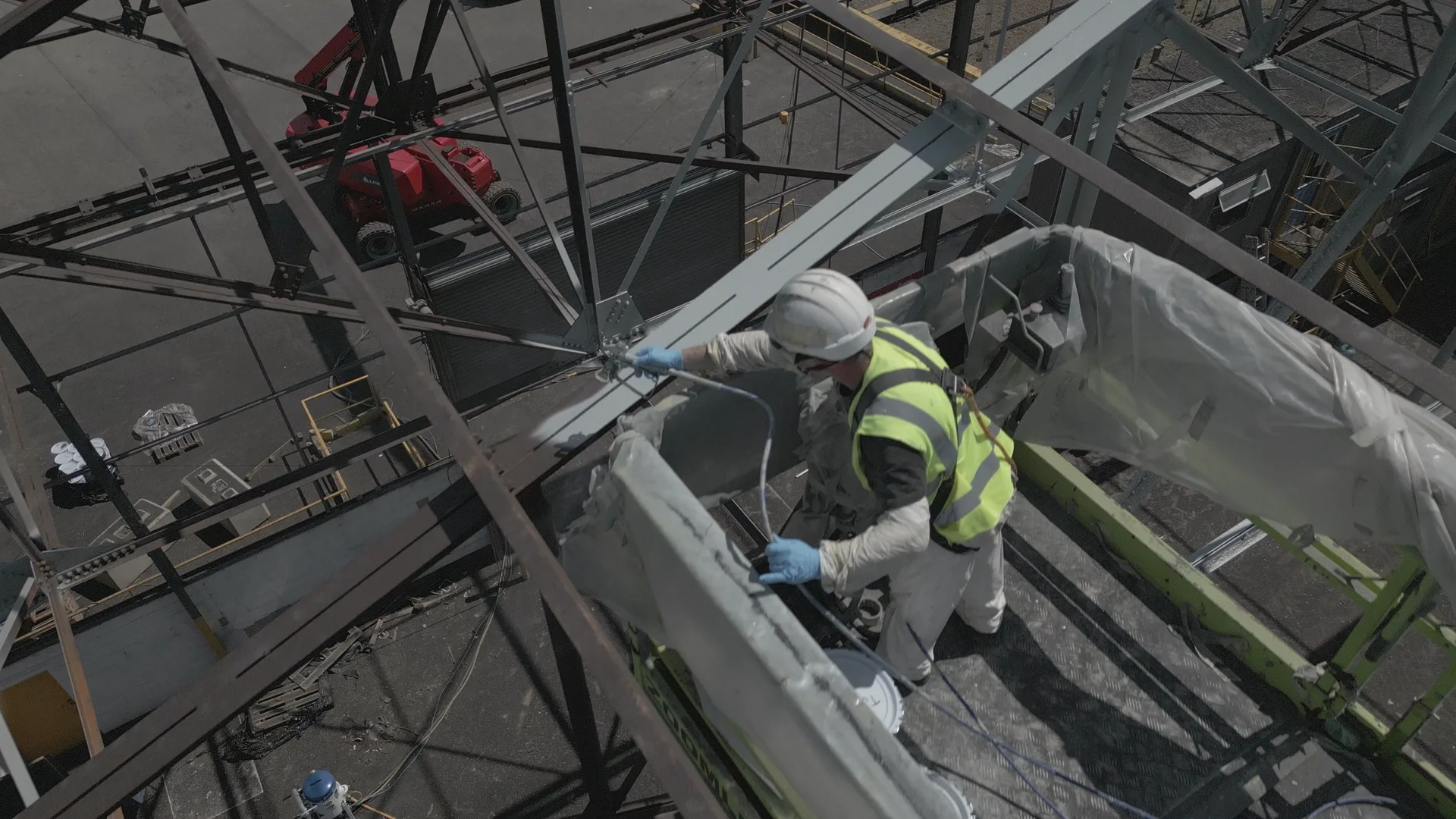
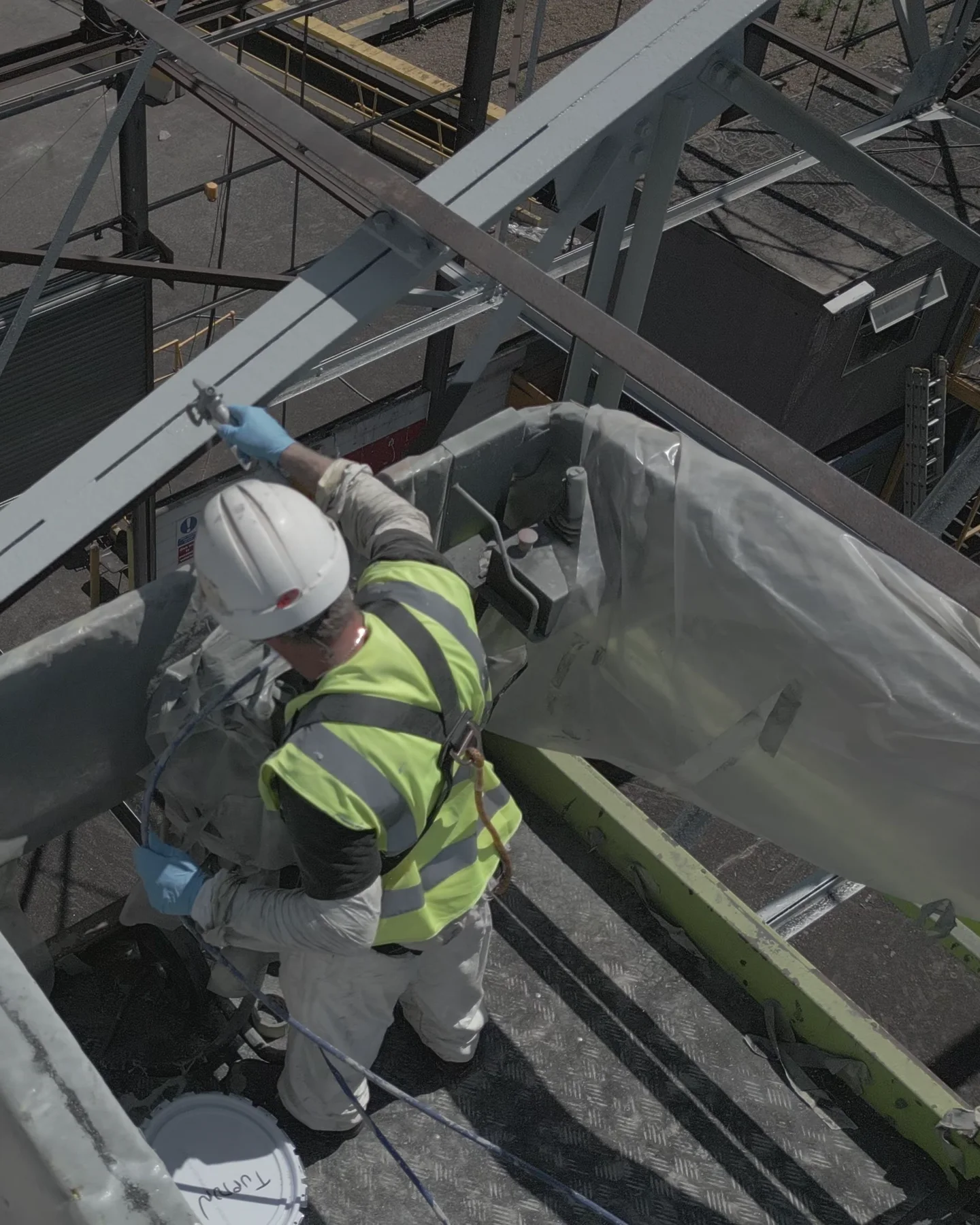
See steel preparation, powered access and spray coating in sequence.
The footage provides practical context for the working method described on this page. It does not identify a project location, coating product, fire rating or approved system.
Discuss the projectDetailed visual description
A worker uses blasting equipment from an articulated boom lift to prepare structural steel. A later sequence shows spray coating from a scissor lift, then wider views of light-grey coated sections. Inspection activity is not shown.
Search this demonstration
There is no spoken dialogue. English closed captions identify the instrumental music; the time-coded transcript describes the visible work.
5 transcript entries found.
Questions before mobilisation
Project details, answered clearly.
Early answers on scope, access and sequencing help the work package move forward with fewer assumptions.
Ask another question01Can you apply over any existing primer?
No. Primer identity, condition and compatibility with the specified intumescent system need to be established. Unknown or unsuitable coatings may require testing or removal.
02Can you confirm the required coating thickness from the fire rating alone?
No. The required build is system- and section-specific. We work from the approved product schedule, steel information, required resistance period and project specification.
03Can Premier Blasting provide both preparation and application?
Yes. Where the project requires it, one delivery team can complete abrasive preparation, compatible primer application, intumescent coating and the specified finish as one coordinated sequence.
Prepared. Applied. Coordinated.
Need a contractor to review the steelwork and scope?
Share the project information you already have. We will identify the next practical step.